Saw cutting JHA: hazards, controls and PPE.
Start from this template, add what's different on your site today, and have the crew sign.
| Hazards · Saw cutting |
|---|
| Silica dust from concrete, block, brick and stone |
| Kickback and blade contact |
| Noise |
| Electric shock from cords and water |
Controls
- Water on the blade (OSHA Table 1).
- Handheld saw outdoors over 4 hours a shift, or any time indoors: wear an APF 10 respirator (Table 1).
- Blade guard on. Right blade for the material; check it for cracks.
- Two hands on a handheld saw. Stand out of the line of the blade.
All 6 hazards and 7 controls → · 29 CFR 1926.1153 Table 1
Toolbox talk: Silica dust
A starting point, not a finished JHA. Walk the site and have the competent person sign it.
Hazards
- Silica dust from concrete, block, brick and stone
- Kickback and blade contact
- Noise
- Electric shock from cords and water
- Cutting into buried rebar, conduit or post-tension cable
- Slurry making the ground slick
Controls
- Water on the blade (OSHA Table 1).
- Handheld saw outdoors over 4 hours a shift, or any time indoors: wear an APF 10 respirator (Table 1).
- Blade guard on. Right blade for the material; check it for cracks.
- Two hands on a handheld saw. Stand out of the line of the blade.
- GFCI on electric saws; keep cords out of the slurry.
- Scan slabs before you cut. Never cut post-tension slabs without the engineer's OK.
- Gas saws indoors make carbon monoxide: ventilate or use electric.
PPE
- Safety glasses
- Face shield for handheld cutting
- Hearing protection
- Respirator (APF 10) when Table 1 calls for it
- Work gloves
- Steel-toe boots
OSHA rules
29 CFR 1926.1153 Table 1 · 29 CFR 1926.404(b)(1) · 29 CFR 1926.300(b)
Toolbox talk: Silica dust
- Cutting, grinding or drilling concrete, block, brick or stone makes silica dust. It causes silicosis and lung cancer.
- Water on the blade or a vacuum shroud, every time.
- Follow Table 1 for the tool. It says when you need a respirator.
- No dry sweeping or compressed air. Wet sweep or HEPA vac.
- A written exposure control plan is required, and a competent person runs it.
The full talk, with questions for the crew →
A starting point, not a finished JHA. Walk the site, add what's different today, and have the competent person sign it.
Tomorrow, the crew signs it on one phone.
Dozer writes the JHA and the toolbox talk from what you say and what the cameras saw yesterday. The crew signs on the foreman's phone, and it files itself in the site's day.
- One JHA per task, per day, in under a minute
- The toolbox talk that matches the work
- Signatures on one phone, no clipboard
- Filed with the daily log, ready for an inspector
 LIVE Toolbox talk · trench safety · 12 signed
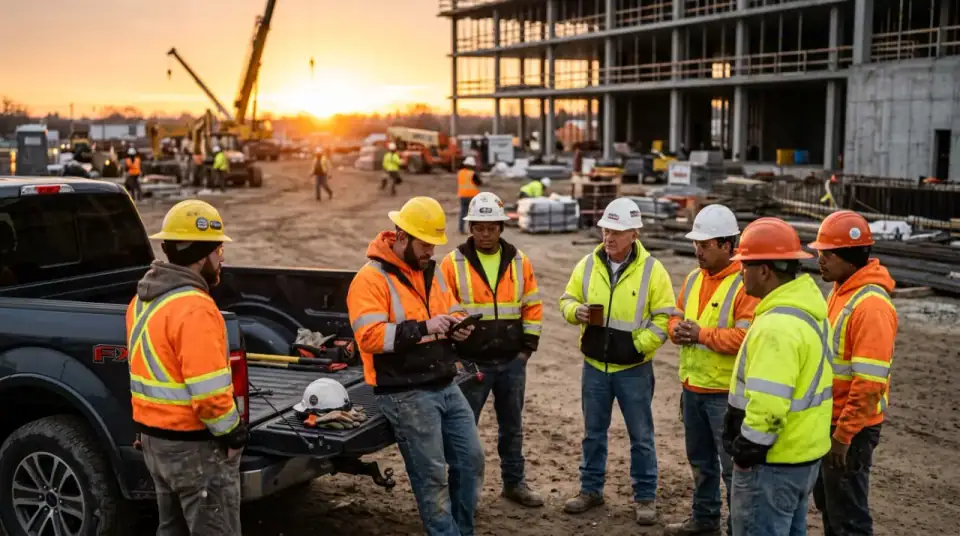
Photo is an AI-generated stand-in, not a customer site.
Email me the PDF
We'll send this to you as a PDF, plus a reminder if there's a date in it. One email, no list.
We use it to send this and nothing else. See privacy.
Questions crews ask
What are the hazards of saw cutting?
Silica dust from concrete, block, brick and stone. Kickback and blade contact. Noise. Electric shock from cords and water. Cutting into buried rebar, conduit or post-tension cable. Slurry making the ground slick.
What controls go in a saw cutting JHA?
Water on the blade (OSHA Table 1). Handheld saw outdoors over 4 hours a shift, or any time indoors: wear an APF 10 respirator (Table 1). Blade guard on. Right blade for the material; check it for cracks. Two hands on a handheld saw. Stand out of the line of the blade. GFCI on electric saws; keep cords out of the slurry.
What PPE is needed for saw cutting?
Safety glasses, Face shield for handheld cutting, Hearing protection, Respirator (APF 10) when Table 1 calls for it, Work gloves, Steel-toe boots. Add what your site and the task's SDS call for.
Which OSHA rules cover saw cutting?
29 CFR 1926.1153 Table 1; 29 CFR 1926.404(b)(1); 29 CFR 1926.300(b).
Related free tools
Your site at 6 a.m., before you're there.
Free for one site and one camera. $99 a site after. Crew is always free. 7 days of everything free, no card.