
Trenching JHA: hazards, controls and PPE.
Start from this template, add what's different on your site today, and have the crew sign.
| Hazards · Trenching |
|---|
| Utility strike: gas, power, water or fiber in the way |
| Cave-in: a trench wall gives way and buries someone |
| Struck-by: the bucket or the swinging excavator |
| Falling into the trench, or tools and spoils falling in |
Controls
- Call 811 and pothole before digging. Hand dig or vac near the marks.
- Trench box or slope at 5 ft or deeper. Over 20 ft deep, an engineer designs the protection.
- Competent person checks the trench daily, before each shift and after rain.
- Ladder, ramp or stairs within 25 ft of every worker in trenches 4 ft or deeper.
All 5 hazards and 8 controls → · 29 CFR 1926.651
Toolbox talk: Trench boxes
A starting point, not a finished JHA. Walk the site and have the competent person sign it.
Hazards
- Utility strike: gas, power, water or fiber in the way
- Cave-in: a trench wall gives way and buries someone
- Struck-by: the bucket or the swinging excavator
- Falling into the trench, or tools and spoils falling in
- Bad air or standing water in the trench
Controls
- Call 811 and pothole before digging. Hand dig or vac near the marks.
- Trench box or slope at 5 ft or deeper. Over 20 ft deep, an engineer designs the protection.
- Competent person checks the trench daily, before each shift and after rain.
- Ladder, ramp or stairs within 25 ft of every worker in trenches 4 ft or deeper.
- Keep spoils and equipment at least 2 ft back from the edge.
- Stay out of the swing radius. Nobody stands under a raised bucket or load.
- Test the air in trenches over 4 ft deep where bad air could build up (near sewers, fuel, landfill).
- Pump out water. Nobody works in standing water without protection and a competent person watching.
PPE
- Hard hat
- High-vis vest (Class 2; Class 3 at night)
- Steel-toe boots
- Safety glasses
- Work gloves
OSHA rules
29 CFR 1926.651 · 29 CFR 1926.652 · 29 CFR 1926 Subpart P
Toolbox talk: Trench boxes
- At 5 ft or deeper, the trench needs a box, shoring or a slope. Over 20 ft, an engineer designs it.
- Use the box's tab data: depth rating and how it's stacked.
- Stay inside the box. Never stand between the box and the trench wall.
- Get in and out by the ladder inside the box, within 25 ft of you.
- Nobody in the box while it's being moved.
The full talk, with questions for the crew →
A starting point, not a finished JHA. Walk the site, add what's different today, and have the competent person sign it.
Tomorrow, the crew signs it on one phone.
Dozer writes the JHA and the toolbox talk from what you say and what the cameras saw yesterday. The crew signs on the foreman's phone, and it files itself in the site's day.
- One JHA per task, per day, in under a minute
- The toolbox talk that matches the work
- Signatures on one phone, no clipboard
- Filed with the daily log, ready for an inspector
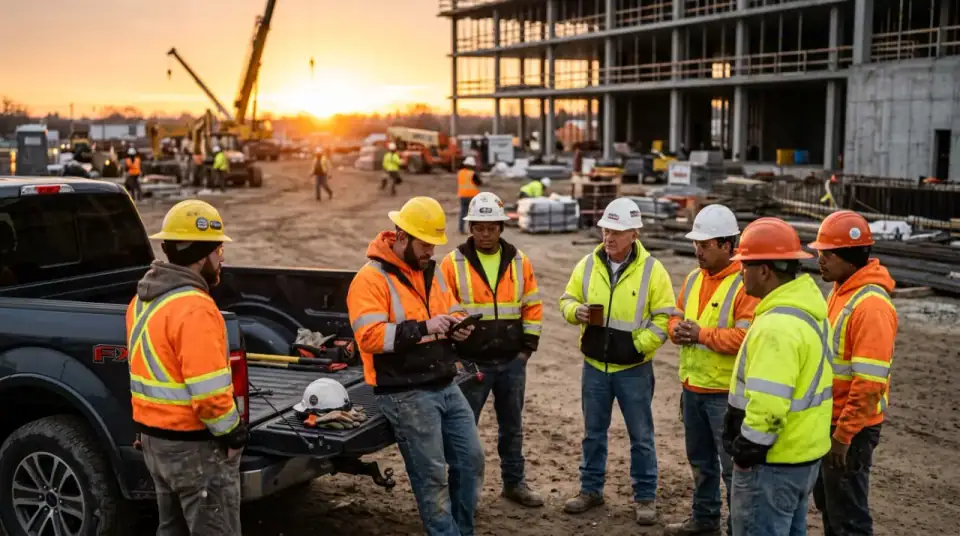 LIVE Toolbox talk · trench safety · 12 signed
Photo is an AI-generated stand-in, not a customer site.
Email me the PDF
We'll send this to you as a PDF, plus a reminder if there's a date in it. One email, no list.
We use it to send this and nothing else. See privacy.
Questions crews ask
What are the hazards of trenching?
Utility strike: gas, power, water or fiber in the way. Cave-in: a trench wall gives way and buries someone. Struck-by: the bucket or the swinging excavator. Falling into the trench, or tools and spoils falling in. Bad air or standing water in the trench.
What controls go in a trenching JHA?
Call 811 and pothole before digging. Hand dig or vac near the marks. Trench box or slope at 5 ft or deeper. Over 20 ft deep, an engineer designs the protection. Competent person checks the trench daily, before each shift and after rain. Ladder, ramp or stairs within 25 ft of every worker in trenches 4 ft or deeper. Keep spoils and equipment at least 2 ft back from the edge.
What PPE is needed for trenching?
Hard hat, High-vis vest (Class 2; Class 3 at night), Steel-toe boots, Safety glasses, Work gloves. Add what your site and the task's SDS call for.
Which OSHA rules cover trenching?
29 CFR 1926.651; 29 CFR 1926.652; 29 CFR 1926 Subpart P.
Related free tools
Your site at 6 a.m., before you're there.
Free for one site and one camera. $99 a site after. Crew is always free. 7 days of everything free, no card.