
Dewatering and pumps JHA: hazards, controls and PPE.
Start from this template, add what's different on your site today, and have the crew sign.
| Hazards · Dewatering and pumps |
|---|
| Trench walls softened by water caving in |
| Electric shock from pumps and cords |
| Carbon monoxide from gas pumps |
| Hose whip |
Controls
- Nobody works in standing water without protection. A competent person watches the water removal.
- Gas pumps go outside the trench and away from enclosed spaces. Test the air.
- GFCI on electric pumps.
- Secure discharge hoses. Send the water to sediment control, per the SWPPP.
All 5 hazards and 6 controls → · 29 CFR 1926.651(h)
Toolbox talk: GFCIs and cords
A starting point, not a finished JHA. Walk the site and have the competent person sign it.
Hazards
- Trench walls softened by water caving in
- Electric shock from pumps and cords
- Carbon monoxide from gas pumps
- Hose whip
- Drowning in a flooded excavation
Controls
- Nobody works in standing water without protection. A competent person watches the water removal.
- Gas pumps go outside the trench and away from enclosed spaces. Test the air.
- GFCI on electric pumps.
- Secure discharge hoses. Send the water to sediment control, per the SWPPP.
- Guards on belts and couplings.
- Watch for boils or undermining from pumping.
PPE
- Hard hat
- High-vis vest (Class 2; Class 3 at night)
- Rubber boots
- Work gloves
OSHA rules
29 CFR 1926.651(h) · 29 CFR 1926.404(b)(1) · 29 CFR 1926.55
Toolbox talk: GFCIs and cords
- Every 120-volt temp power outlet needs a GFCI.
- Test the GFCI before you plug in.
- Look over the cord: cuts, missing ground pin, taped splices mean out of service.
- Keep cords out of water and off walkways.
The full talk, with questions for the crew →
A starting point, not a finished JHA. Walk the site, add what's different today, and have the competent person sign it.
Tomorrow, the crew signs it on one phone.
Dozer writes the JHA and the toolbox talk from what you say and what the cameras saw yesterday. The crew signs on the foreman's phone, and it files itself in the site's day.
- One JHA per task, per day, in under a minute
- The toolbox talk that matches the work
- Signatures on one phone, no clipboard
- Filed with the daily log, ready for an inspector
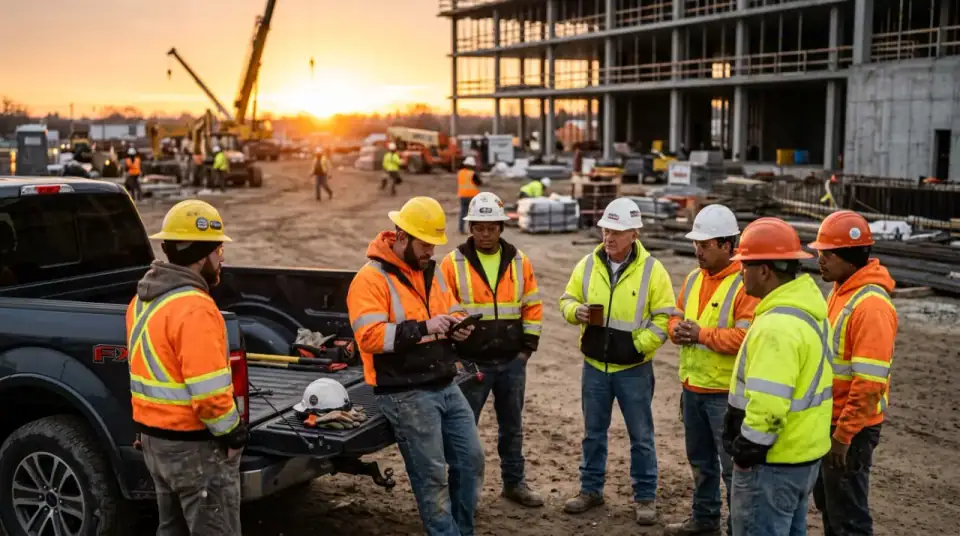 LIVE Toolbox talk · trench safety · 12 signed
Photo is an AI-generated stand-in, not a customer site.
Email me the PDF
We'll send this to you as a PDF, plus a reminder if there's a date in it. One email, no list.
We use it to send this and nothing else. See privacy.
Questions crews ask
What are the hazards of dewatering and pumps?
Trench walls softened by water caving in. Electric shock from pumps and cords. Carbon monoxide from gas pumps. Hose whip. Drowning in a flooded excavation.
What controls go in a dewatering and pumps JHA?
Nobody works in standing water without protection. A competent person watches the water removal. Gas pumps go outside the trench and away from enclosed spaces. Test the air. GFCI on electric pumps. Secure discharge hoses. Send the water to sediment control, per the SWPPP. Guards on belts and couplings.
What PPE is needed for dewatering and pumps?
Hard hat, High-vis vest (Class 2; Class 3 at night), Rubber boots, Work gloves. Add what your site and the task's SDS call for.
Which OSHA rules cover dewatering and pumps?
29 CFR 1926.651(h); 29 CFR 1926.404(b)(1); 29 CFR 1926.55.
Related free tools
Your site at 6 a.m., before you're there.
Free for one site and one camera. $99 a site after. Crew is always free. 7 days of everything free, no card.