
Manhole and vault work JHA: hazards, controls and PPE.
Start from this template, add what's different on your site today, and have the crew sign.
| Hazards · Manhole and vault work |
|---|
| Bad air: hydrogen sulfide, low oxygen, methane |
| Falling into the open manhole |
| Traffic around the opening |
| Back injury lifting the cover |
Controls
- Treat it as a permit-required confined space until tested and evaluated.
- Test the air before and during entry: oxygen first, then flammables, then toxics.
- Tripod and winch for vertical entries over 5 ft. Attendant at the top the whole time.
- Guardrail or cover the opening when nobody's working in it.
All 5 hazards and 6 controls → · 29 CFR 1926 Subpart AA (1926.1200-1926.1213)
Toolbox talk: Confined spaces: test before you enter
A starting point, not a finished JHA. Walk the site and have the competent person sign it.
Hazards
- Bad air: hydrogen sulfide, low oxygen, methane
- Falling into the open manhole
- Traffic around the opening
- Back injury lifting the cover
- Rising water
Controls
- Treat it as a permit-required confined space until tested and evaluated.
- Test the air before and during entry: oxygen first, then flammables, then toxics.
- Tripod and winch for vertical entries over 5 ft. Attendant at the top the whole time.
- Guardrail or cover the opening when nobody's working in it.
- Traffic control around the opening.
- Use a cover hook or lifter. Don't lift covers by hand.
PPE
- 4-gas monitor
- Full-body harness with retrieval line
- Hard hat
- High-vis vest (Class 2; Class 3 at night)
- Work gloves
- Steel-toe boots
OSHA rules
29 CFR 1926 Subpart AA (1926.1200-1926.1213) · 29 CFR 1926.502(i) · MUTCD Part 6
Toolbox talk: Confined spaces: test before you enter
- Manholes, vaults, tanks and pits can have bad air you can't smell.
- Test oxygen, then flammables, then toxics, before and during entry.
- Attendant at the top the whole time.
- Most people who die in confined spaces are would-be rescuers. Don't go in after someone.
- Call rescue and use the retrieval line.
The full talk, with questions for the crew →
A starting point, not a finished JHA. Walk the site, add what's different today, and have the competent person sign it.
Tomorrow, the crew signs it on one phone.
Dozer writes the JHA and the toolbox talk from what you say and what the cameras saw yesterday. The crew signs on the foreman's phone, and it files itself in the site's day.
- One JHA per task, per day, in under a minute
- The toolbox talk that matches the work
- Signatures on one phone, no clipboard
- Filed with the daily log, ready for an inspector
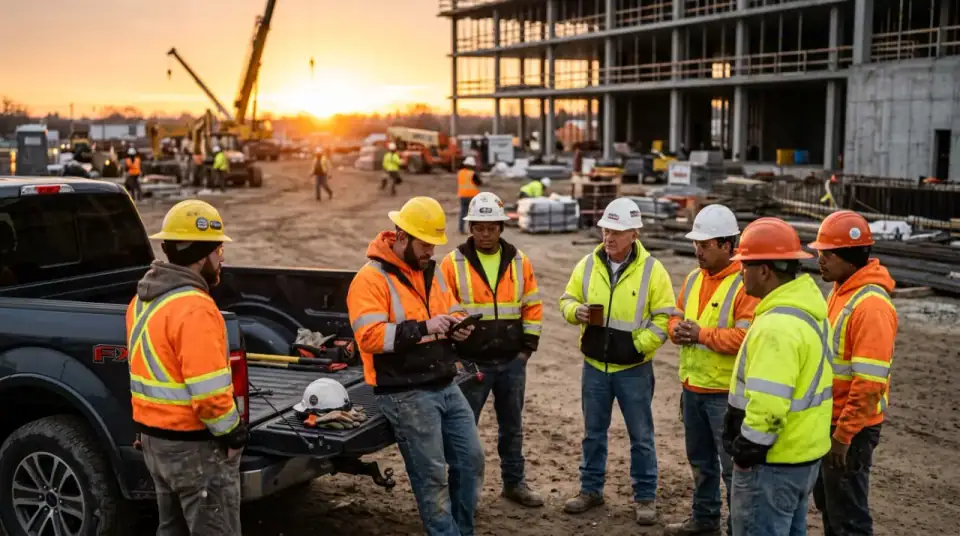 LIVE Toolbox talk · trench safety · 12 signed
Photo is an AI-generated stand-in, not a customer site.
Email me the PDF
We'll send this to you as a PDF, plus a reminder if there's a date in it. One email, no list.
We use it to send this and nothing else. See privacy.
Questions crews ask
What are the hazards of manhole and vault work?
Bad air: hydrogen sulfide, low oxygen, methane. Falling into the open manhole. Traffic around the opening. Back injury lifting the cover. Rising water.
What controls go in a manhole and vault work JHA?
Treat it as a permit-required confined space until tested and evaluated. Test the air before and during entry: oxygen first, then flammables, then toxics. Tripod and winch for vertical entries over 5 ft. Attendant at the top the whole time. Guardrail or cover the opening when nobody's working in it. Traffic control around the opening.
What PPE is needed for manhole and vault work?
4-gas monitor, Full-body harness with retrieval line, Hard hat, High-vis vest (Class 2; Class 3 at night), Work gloves, Steel-toe boots. Add what your site and the task's SDS call for.
Which OSHA rules cover manhole and vault work?
29 CFR 1926 Subpart AA (1926.1200-1926.1213); 29 CFR 1926.502(i); MUTCD Part 6.
Your site at 6 a.m., before you're there.
Free for one site and one camera. $99 a site after. Crew is always free. 7 days of everything free, no card.