Heavy equipment inspection checklist, machine by machine.
The walk-around every machine gets, then each machine's own items.
MachineCat 320 excavator
Hour meter4,812 h
FailedQuick coupler: pin won't lock
- Bucket on the ground, key out, tag on the controls.
- Write it up for the mechanic, with a photo.
- 4,812 h: the 1,000-hour service is 188 hours out.
- 1Sign upWith email, Google or Apple.
- 2Tell it about the siteLike you'd tell a new foreman.
- 3It opens, built for your siteMachines, plus fault codes and theft alerts
A heavy equipment inspection checklist is the walk-around an operator does before the shift. Every machine gets the same core: leaks, tracks or tires, hoses, pins, guards, fluids, the seat belt, horn, backup alarm, lights, brakes, steering and the hour meter. Then each machine adds its own items. Anything unsafe gets tagged out until it's fixed.
Below is the core list, then the extra items for excavator, bulldozer, wheel loader, skid steer and track loader, backhoe loader, roller and compactor, motor grader and articulated dump truck. Not sure what a machine is called? See the heavy equipment names. Forklifts and telehandlers have their own forklift inspection checklist, and road trucks get the pre-trip inspection and DVIR.
What OSHA and MSHA require
- Regular inspections: the safety program provides for "frequent and regular inspections of the job sites, materials, and equipment" by a competent person (1926.20(b)(2)).
- Trucks on site: checked at the beginning of each shift: service brakes, parking brake, emergency brakes, tires, horn, steering, coupling devices, seat belts, operating controls and safety devices. Defects are fixed before it runs (1926.601(b)(14)).
- Earthmovers: brakes that stop and hold the machine fully loaded, seat belts where there's a rollover cage, a horn that works, and a backup alarm or a person signaling when the view behind is blocked (1926.602(a)(2), (a)(4) and (a)(9)).
- Parked: blades, buckets and dump bodies fully lowered or blocked, the parking brake set, and wheels chocked on a slope (1926.600(a)(3)). Cab glass is safety glass with no distortion (1926.600(a)(5)).
- Failed: equipment that doesn't comply is "identified as unsafe by tagging or locking the controls to render them inoperable" or removed (1926.20(b)(3)).
- At a mine or quarry: the operator inspects mobile equipment before each shift, unsafe defects are tagged out or the machine is parked in a posted area, and defects not fixed right away are recorded (30 CFR 56.14100).
The walk-around every machine gets
Machine / unit #: ______________ Hour meter: __________ Date: __________ Operator: ____________________
| Check | Look for | OK | Fail |
|---|---|---|---|
| Under the machine | No fresh puddles of oil, fuel, coolant or hydraulic fluid. | ☐ | ☐ |
| Tracks or tires | Tracks: tension right, no broken shoes or missing bolts, rollers and idlers turning. Tires: at pressure, no deep cuts, lug nuts tight. | ☐ | ☐ |
| Hoses and cylinders | No leaks, rubbing, bulges or scored cylinder rods. | ☐ | ☐ |
| Pins and linkage | Every pin in with its keeper, greased, no slop. | ☐ | ☐ |
| Bucket, blade or attachment | Teeth and cutting edge in place, no cracks, coupler locked. | ☐ | ☐ |
| Guards, steps and handholds | In place, not bent, and clear of mud and ice. | ☐ | ☐ |
| Fluids | Engine oil, hydraulic oil, coolant and fuel at the marks. DEF on Tier 4 machines. | ☐ | ☐ |
| Belts and air filter | Belts tight and not cracked. The air filter light or gauge reads clean. | ☐ | ☐ |
| Glass, mirrors and camera | Cab glass not cracked, mirrors set, camera lens clean. | ☐ | ☐ |
| Seat belt and ROPS | Belt latches and isn't cut or frayed. The rollover cage or canopy isn't damaged. | ☐ | ☐ |
| Fire extinguisher | If the machine carries one: mounted, charged, pin in. | ☐ | ☐ |
| Gauges and warning lights | All clear after start-up. Write down any fault code on the dash. | ☐ | ☐ |
| Horn | Loud enough to hear over the machine. | ☐ | ☐ |
| Backup alarm | Sounds in reverse. | ☐ | ☐ |
| Lights | Work lights and beacon on. | ☐ | ☐ |
| Brakes and parking brake | Stops the machine and holds it. | ☐ | ☐ |
| Steering and controls | Every function smooth, nothing drifts, the safety lockout lever locks the controls. | ☐ | ☐ |
| Hour meter | Write the reading down. | ☐ | ☐ |
Add the machine's own items
Excavator
- ☐ Quick coupler: the pin is in and the coupler locks. Check it every time the attachment changes.
- ☐ Bucket teeth, adapters and side cutters: none missing or loose.
- ☐ Boom and stick: no cracks at the welds, no bent sections.
- ☐ Swing: smooth, no clunk, and the swing brake holds.
- ☐ Undercarriage: sprocket, idlers and rollers turning, no packed mud or rock.
- ☐ Lifting: the hook or lift eye and its latch are good, and the lift chart is in the cab.
Bulldozer
- ☐ Blade: cutting edge and end bits not worn through, bolts tight.
- ☐ Push arms and trunnions: no cracks, pins in.
- ☐ Ripper: shanks and tips in place, pin locked.
- ☐ Tracks: grousers not worn flat, tension right, no broken shoes.
- ☐ Final drives: no oil around the seals.
- ☐ Belly pan: clear of sticks and trash, where a fire starts.
Wheel loader
- ☐ Articulation joint: pins and bushings tight. The steering lock bar is stowed for work and in place for transport or service.
- ☐ Bucket, teeth and cutting edge: none missing, no cracks.
- ☐ Lift arms and linkage: pins in, no cracks.
- ☐ Tires and rims: no cuts to the cords, no cracked rims.
- ☐ Transmission oil at the mark.
Skid steer and track loader
- ☐ Seat bar: with the bar up, the lift arms and drive won't move. Never bypass it.
- ☐ Lift-arm support: on the machine, for working under raised arms.
- ☐ Quick attach: both levers down and both pins through the attachment.
- ☐ Cab door, glass or side screens: in place.
- ☐ Rear window or escape hatch: opens.
- ☐ Tracks or tires, and the lift-arm pins greased.
Backhoe loader
- ☐ Stabilizers: go down, hold, pads in place.
- ☐ Boom lock and swing lock: in place for travel.
- ☐ Swing cylinders and the extendahoe: no leaks, no slop.
- ☐ Loader bucket and arms: same as a wheel loader.
- ☐ Road lights and flashers for driving between jobs.
Roller and compactor
- ☐ Drums: no cracks, scrapers set against the drum.
- ☐ Vibration: turns on and off from the seat.
- ☐ Water spray (asphalt): tank full, nozzles clear.
- ☐ Seat belt and ROPS: rollers roll over on edges and slopes.
- ☐ Edge cutter or compaction wheel, if fitted.
Motor grader
- ☐ Moldboard and cutting edge: not worn through, bolts tight.
- ☐ Circle and drawbar: no cracks, no slop.
- ☐ Tandem drive: no oil leaks.
- ☐ Articulation lock: in place for service and transport.
- ☐ Ripper or scarifier teeth, if fitted.
Articulated dump truck
- ☐ Body hoist cylinders: no leaks. The body support works for working under a raised bed.
- ☐ Articulation and oscillation joint: pins tight, no cracks.
- ☐ Tires: no cuts to the cords.
- ☐ Brakes, retarder and parking brake: stop and hold a loaded truck.
- ☐ Tailgate, mirrors and camera.
- ☐ OSHA's shift-start list for trucks on site applies: brakes, parking brake, tires, horn, steering, coupling devices, seat belts, controls and safety devices (1926.601(b)(14)).
What failed and what was done: ______________________________________________________________
Operator signature: ____________________ Repaired by: ____________________ Date: __________
What tags a machine out
Any one of these and the machine doesn't work today:
- Brakes that don't stop it, or a parking brake that doesn't hold
- Steering that binds or doesn't answer
- A dead horn, or a dead backup alarm on a machine that can't see behind it and has no spotter
- A seat belt that's missing, cut or won't latch, or a damaged rollover cage
- A hydraulic hose leaking under pressure, or a boom, arm or blade that drifts down
- A quick coupler that won't lock
- A cracked boom, stick, frame, loader arm or push arm
- A broken track, or a tire cut to the cords
- A fuel leak
- A seat-bar interlock or lockout lever that doesn't work, or one somebody bypassed
- A red warning light, or a fault code the dash calls a stop
A fault code on the dash isn't always a stop. Look it up in the J1939 fault code lookup: it says what the code means, how serious it is and what to check first.
How to tag it out
- Park on level ground if you can. Lower the bucket, blade or bed to the ground.
- Set the parking brake, and chock the wheels on a slope.
- Shut it down and take the key.
- Hang a "Do not operate" tag on the controls with the date, your name and what's wrong.
- Tell your foreman and the mechanic. The tag comes off after the repair, once the item is checked again.
Tagging out a broken machine isn't the same as locking out its energy for a repair. The mechanic working on it follows lockout steps; see the lockout/tagout JHA.
How to record it
Keep one sheet per machine per shift: the machine, the hour meter, the date, the operator, each item OK or failed, and what was done about a failure. At a mine it's required for defects not fixed right away. Everywhere else it's how you show the machine was checked, and how the mechanic hears about a problem before it's a breakdown.
The hour meter is the line that keeps the maintenance honest. In Dozer, each machine's hours come from a photo of the hour meter or are typed in, and the next 250, 500, 1,000 or 2,000-hour service counts down. A code from the dash goes into the code lookup and from there onto a repair ticket for that machine. See how machine service due works.
Sources
Read on 2026-11-15. Rules change; check the current text.
- 29 CFR 1926.20(b)(2) and (b)(3): eCFR, 1926.20 General safety and health provisions
- 29 CFR 1926.600(a)(3) and (a)(5): eCFR, 1926.600 Equipment
- 29 CFR 1926.601(b)(14): eCFR, 1926.601 Motor vehicles
- 29 CFR 1926.602(a)(2), (a)(4) and (a)(9): eCFR, 1926.602 Material handling equipment
- 30 CFR 56.14100: eCFR, 56.14100 Safety defects; examination, correction and records
A starting point, not legal or safety advice. The machine's manual and your site's rules come first.
Every machine's hours, without the clipboard.
Photo the serial plate or drop in your fleet spreadsheet.
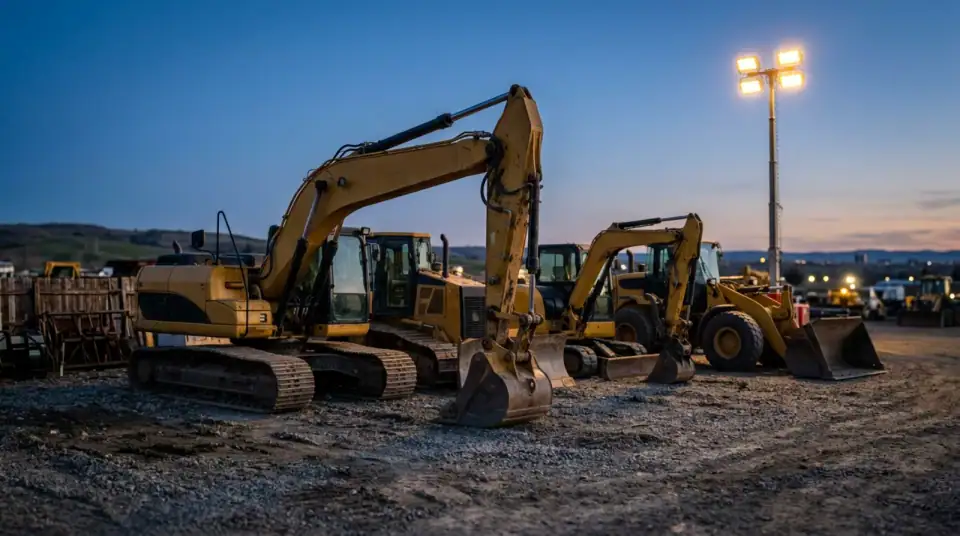 LIVE 5 of 6 working · EX-04 passed 6 h
AI-generated stand-in photo, not a customer site.
Questions
Something else? Ask a person.
What should be on a heavy equipment inspection checklist?
Leaks under the machine, tracks or tires, hoses and cylinders, pins and linkage, the bucket or blade, guards and steps, fluids, glass and mirrors, the seat belt and rollover cage, gauges and warning lights, horn, backup alarm, lights, brakes, steering and controls, and the hour meter. Then each machine's own items, like the quick coupler on an excavator or the seat bar on a skid steer.
How often should heavy equipment be inspected?
Before every shift by the operator, plus the scheduled service by hours. OSHA asks for frequent and regular inspections by a competent person (1926.20(b)(2)) and a shift-start check of trucks on site (1926.601(b)(14)). At a mine, MSHA requires the operator to inspect mobile equipment before each shift (30 CFR 56.14100(a)).
Does OSHA require a daily equipment inspection?
For trucks used on the site, yes: 1926.601(b)(14) lists what to check at the beginning of each shift. For earthmovers, 1926.602 sets what the machine must have (brakes, seat belts, a horn, a backup alarm or a spotter) rather than a daily list, and 1926.20(b) asks for regular inspections and tagging out what fails. The operator's manual has the daily check for each model.
What do you do when a machine fails inspection?
Don't run it. OSHA says equipment that isn't in compliance is tagged or locked out at the controls, or removed (1926.20(b)(3)). Lower the bucket or blade, set the parking brake, take the key, hang the tag with your name, the date and what's wrong, and tell whoever fixes it.
Do I have to keep equipment inspection records?
OSHA's construction rules don't ask for the paper. MSHA does at a mine: safety defects that aren't fixed right away are reported to and recorded by the mine operator, and kept until they're fixed (30 CFR 56.14100(d)). Either way, a signed sheet with the hour meter is the best proof the machine was checked.
Put an AI foreman on your site.
Tell it about your site. It sets up the rest.