July safety topics for construction crews.
Heat, dust, fuel and water. Four weekly talks.
- Week 1: Heat illness
- Week 2: Silica dust
- Week 3: Fueling equipment
- Week 4: Working over water
Ask the crew: Where on this site today does "heat illness" matter most?
Peak heat, dry dust, fuel in the heat, summer work near water
- 1Sign upWith email, Google or Apple.
- 2Tell it about the siteLike you'd tell a new foreman.
- 3It opens, built for your siteJHA & talks, plus crew sign-off on one phone
July safety topics for a construction crew: heat illness first, since July brings the hottest weeks to much of the country; silica dust when the ground and the material are bone dry; fueling equipment in the heat; and working on or near water. Below are four weekly talks, backups, the hazards that change this month and the July dates.
Four weekly talks for July
| Week | Toolbox talk | Goes with the JHA |
|---|---|---|
| 1 | Heat illness | Working in heat |
| 2 | Silica dust | Saw cutting |
| 3 | Fueling equipment | Fueling equipment |
| 4 | Working over water | Work over or near water |
Week 1: Heat illness
Peak heat, and the week of the July 4 holiday brings people back from time off who've lost their heat tolerance. OSHA's heat emphasis program was reissued April 10, 2026.
On site: Point at the water, shade and cooling spot. Say the heat stroke signs and the site address for 911.
The talk: Heat illness, 5 points in about 5 minutes. It goes with the working in heat JHA.
Week 2: Silica dust
Dry weather means dry cutting dust. Silica dust causes silicosis and lung cancer, and Table 1 sets the controls for each tool.
On site: Check the water feed on the saw before the first cut.
The talk: Silica dust, 5 points in about 5 minutes. It goes with the saw cutting JHA.
Week 3: Fueling equipment
Fuel vapor builds faster in the heat, and long days mean more fueling. Engine off, no smoking, cans on the ground.
On site: Walk to the fuel trailer: the extinguisher, the spill kit and the approved cans.
The talk: Fueling equipment, 4 points in about 5 minutes. It goes with the fueling equipment JHA.
Week 4: Working over water
Summer is when the bridge, culvert and pond work happens. Over water, life jackets and a rescue boat or ring buoy are part of the setup.
On site: Point at the ring buoy and the life jackets, and who goes for help.
The talk: Working over water, 4 points in about 5 minutes. It goes with the work over or near water JHA.
Backup talks for July
A fifth week, a rained-out day or a crew that already heard one of the four: use these.
- Lightning: 30 minutes: Afternoon storms.
- Hearing protection: Long days next to loud machines.
- Eye and face protection: Dust and glare.
- First aid and the nearest ER: Heat stroke is a 911 call. Know the address.
What changes on site in July
| Hazard | What the crew does | Rule or source |
|---|---|---|
| Heat illness | Cool water close by, about a cup every 15 to 20 minutes, shade and rest, buddy system. | 29 CFR 1926.51(a) |
| Silica dust | Water on the blade or a vacuum shroud; follow Table 1 for the tool. | 29 CFR 1926.1153 |
| Fuel vapor | Engine off to fuel, approved cans, extinguisher within reach. | 29 CFR 1926.152 |
| Lightning | Shelter at the first thunder; 30 minutes after the last. | Good practice |
Dates on the July calendar
| When | What | Use it for |
|---|---|---|
| July 5, 2027 (Monday, observed) | Independence Day, a federal holiday | People come back from a long weekend not used to the heat. Talk heat on the first day back. |
| In effect, reissued April 10, 2026 | OSHA heat National Emphasis Program | OSHA inspects for heat hazards on hot days. Have water, rest, shade and a plan. |
| June 1 to November 30 | Atlantic hurricane season | Know how the site gets secured before a storm. |
Each date links its source, read on 2026-11-15. Organizers set some of these weeks fresh each year. A date marked "worked out" comes from the organizer's published rule, not an announcement; check the source before you plan around it.
July sign-in sheet
One sheet for the month: a row per person, a column per weekly talk. Keep it with the JHAs; it's your record that the training happened (29 CFR 1926.21(b)(2)).
| Name | Wk 1 | Wk 2 | Wk 3 | Wk 4 |
|---|---|---|---|---|
Dozer opens week 1's talk, Heat illness, in the app. Read it out, the crew signs on one phone, and it's logged with the day.
Send the first talk to my crewA starting point, not legal or safety advice. Match each talk to today's work on your site, and follow your company's safety plan and the competent person.
Safety topics for other months
Last month: June safety topics. Next month: August safety topics. The whole year is on the monthly safety calendar. For a one-minute topic any day, use the safety moments, and to stop the whole job for a longer session, run a safety stand-down.
January · February · March · April · May · June · August · September · October · November · December
Sources
Read on 2026-11-15. Rules are 29 CFR as published on eCFR.
Tomorrow, the crew signs it on one phone.
Dozer writes the JHA and the toolbox talk from what you say about the work.
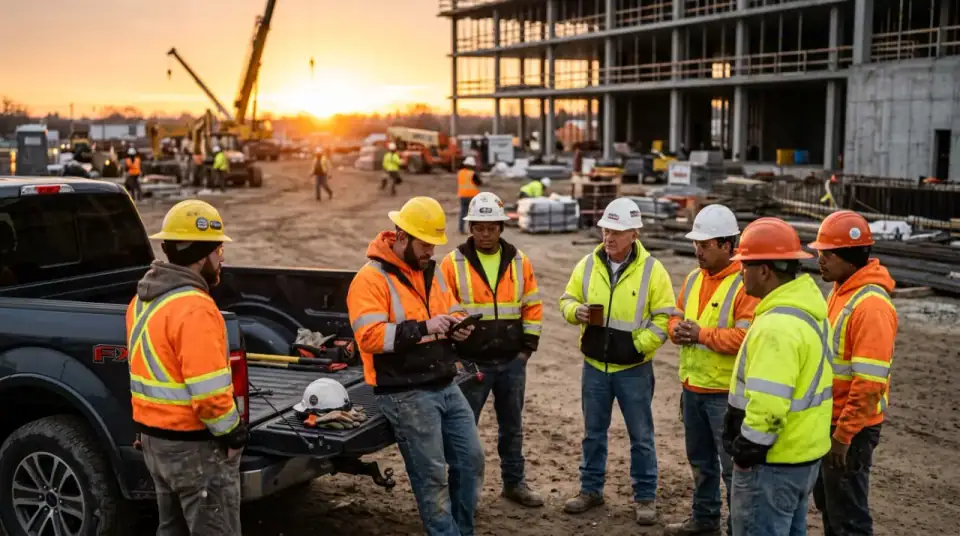 LIVE Toolbox talk · trench safety · 12 signed
AI-generated stand-in photo, not a customer site.
Questions
Something else? Ask a person.
What are good safety topics for July?
Heat illness, silica dust, fueling in the heat and working on or near water. Backups: lightning, hearing, eye protection and first aid.
How much water should workers drink in the heat?
About a cup every 15 to 20 minutes, even if they're not thirsty, with cool water close to the work.
Does OSHA have a heat standard?
OSHA hadn't finished a federal heat standard when we checked on 2026-11-15. It enforces heat hazards under the General Duty Clause and runs a heat National Emphasis Program, reissued April 10, 2026. Some states have their own heat rules.
What are the signs of heat stroke?
Confusion, slurred speech, no sweating, passing out. Call 911 and cool the person with water and ice right away.
Put an AI foreman on your site.
Tell it about your site. It sets up the rest.